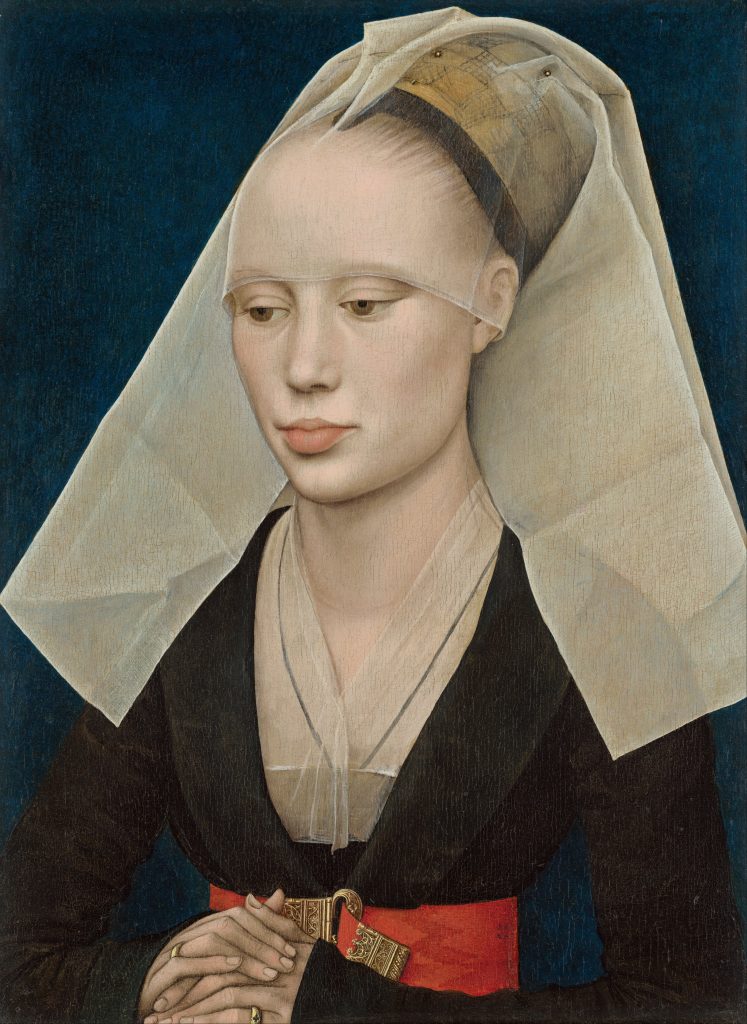
What do these beautiful Renaissance women have in common: Could it be an epidemic of frontal fibrosing alopecia?
-
Throughout Europe, at the end of the 15th century, the greatest portrait painters gave these women a haughty appearance, with foreheads that seem to stretch disproportionately high.
-
This fashion trend originated in France when the ladies-in-waiting of Queen Isabeau of Bavaria, who reportedly suffered from a scalp disorder, decided to shave or pluck their hairline to resemble her, as illustrated by a manuscript illumination dating from around 1410, depicting Christine de Pizan presenting her book to the ladies of the court.
-
This alteration of facial appearance, creating a more elongated face, became a beauty criterion, and many women far beyond the French court—in Italy and the Low Countries—adopted it, as illustrated in paintings by Piero della Francesca and Perhaps the queen really did have frontal fibrosing alopecia or lichen planopilaris. However, we should be cautious about overinterpreting iconodiagnoses without taking into account the sociocultural context of the period.
-
Perhaps the queen really did have frontal fibrosing alopecia or lichen planopilaris. However, we should be cautious about overinterpreting iconodiagnoses without taking into account the sociocultural context of the period.
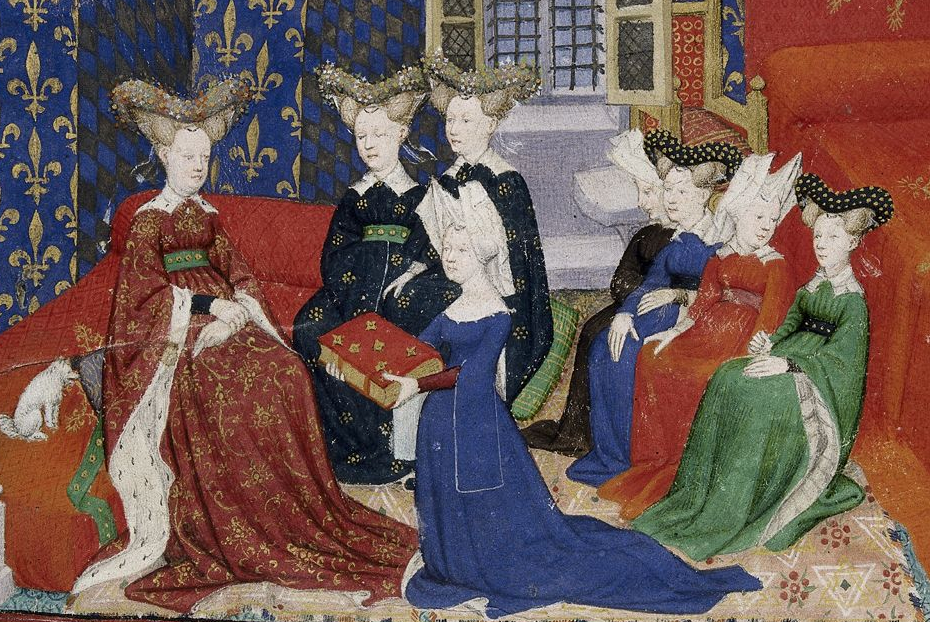
Maitre de la Cité des Dames
Christine de Pisan avec la reine Isabeau
Enluminure sur parchemin 1410
Extrait du livre de la reine
British Library, Londres
Piero della FRANCESCA (1415-1492)
Double Portrait des ducs d’Urbino
Frederic de Montefeltro et Battista Sforza1472
Musée des Offices Florence

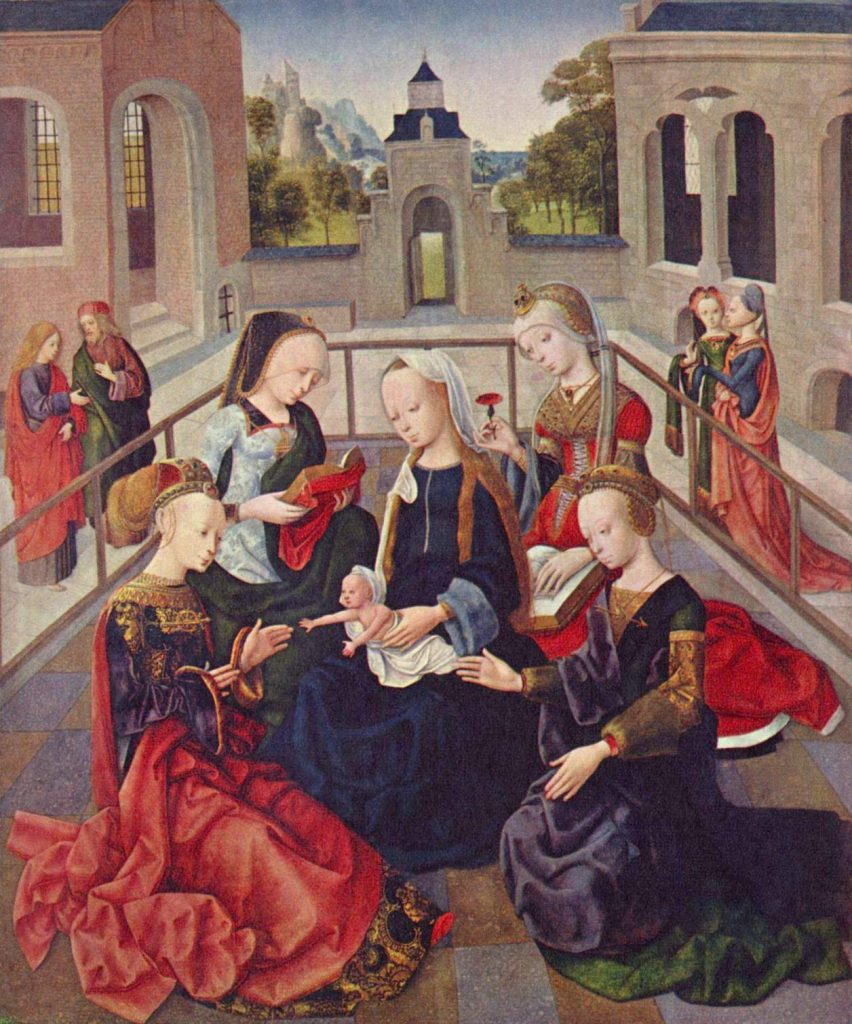
Maitre de la Vierge entre les Vierges
Vierge à l’enfant avec 4 vierges saintes
(Saintes Catherine,Cécile,Barbara et Ursula) 1495.
Rijksmuseum, Amsterdam
Rogier VAN DER WEYDEN (1399-1464)
Portrait d’une femme 1460
National Gallery, Londres